Feb 16

ATRA Begins its Annual Transmission Repair Seminar Training

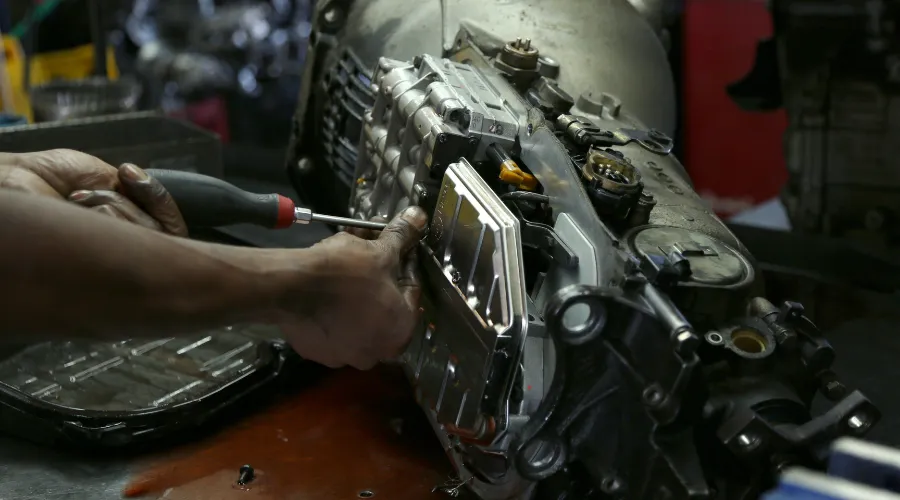
Each year the Automatic Transmission Rebuilders Association provides training to thousands of transmission repair specialists across the USA and Canada. Each year, ATRA produces training seminars covering new technologies and advanced diagnostic procedures so that transmission repair specialists are better able to repair today’s complex automatic transmission systems.  This year, ATRA will visit 22 cities in the USA and Vancouver, Canada and provide a full day of training.

The training schedule began on February 11 in Charlotte North Carolina to an audience of about 120 transmission specialist. ATRA is one of the few sources for expert training to the Transmission Repair industry.

Posted in Technical Seminars, Transmission | Leave a comment
Jan 26

Transmission Fluid Additives That Cause Your Transmission to Fail

Sooner or later your automatic transmission will fail; just like any other mechanical device. They can simply wear out or… they can suffer other problems like hard internal seals. An automatic transmission operates by applying friction components like clutches and bands that operate a series of gear sets. These clutches and bands are applied by hydraulic pistons. These pistons have rubber seal on them to contain the oil pressure.

Here's a piston with a normal sealOver time, these seals may become hard and brittle. In this condition they’re unable to contain the hydraulic pressure so the clutches and bands develop delayed engagements or may not apply at all. Generally, this condition is worse when the transmission is cold. After the transmission warms up the seals will soften enough to operate properly.

This condition requires replacement of the seals in order to fix it properly. This is part of the rebuilding process. However, there are products on the market designed to soften these seals. You can find several brands of “transmission fix” at your local parts store.

Beware though, while these products do restore the sealing properties of the seals they will, over time, soften the seals to the point that they fail. The fix, if you want to call it that, is a short-term remedy and within a few months you can expect the transmission to fail completely.

Some ATF additives will swell the seals so much that they fail. This seal will fall apart in useHere’s the danger: If you’re in the market for a used car you may unknowingly find one that’s had an additive used to fix leaks or shifting problems. Detecting these additives is pretty simple; they have a distinct “sweat” smell to them. If you’ve ever smelled automatic transmission fluid you will definitely recognize the difference with an additive. Just remove the dipstick and take a whiff. If you’re unfamiliar to the odor of transmission fluid or feel uncertain about it then take the car to your local ATRA member; they’ll be happy to check it for you.

Finally, not all transmission fluid additives cause these kinds of problems. Some are actually beneficial to the operation of your automatic transmission. Here again, you can talk to your local ATRA member for more information regarding transmission fluid additives.

Posted in Uncategorized | Leave a comment
Jan 20

The Real Cost of Transmission Repair

You see it all over the internet: “Rebuilt Transmissions, $799 for most cars”, or articles that talk about the high cost of transmission repair. In the articles you’ll read that a reasonable price for rebuilding an automatic transmission might be as high as $1,500. The reality is much different but might lead you to believe you’re getting ripped off if a shop quotes a price much higher than that.Ford Motors invoice

As with any purchase you want to get the best value for your dollar. If you have an older vehicle you might have to consider whether it’s worth investing in the cost of a rebuilt transmission. Perhaps a repair might be a better choice. But if you’re thinking about investing in a quality transmission repair understand that a $1,500 rebuild would be like buying a 50” flat-screen TV for $99; it’s not realistic and the quality just won’t be there.

OK, you like the car you have and you’d like to keep it for awhile but the transmission went out. ATRA can help you understand the cost of rebuilding your transmission. If you’re thinking of trading in your car make sure you check out ATRA’s
Fix or Trade Calculator. It’ll help determine whether keeping your car

Transmission Repair

ATRA FIX IT BUTTON

and getting it fixed might be a better choice than replacing it with a new or used car.

You have a lot of choices when it comes to transmission repair. Take a few moments to learn more about the costs before you spend the money.

Posted in Automotive 101, Cost for Transmissions | Leave a comment
Jan 19

What is a Transmission?

Your car’s transmission is the most complicated and least understood major component in your car or truck. In today’s cars, the transmission is a combination of sophisticated hydraulics and computer-controlled electronic components.

Automatic Transmission
No one component in your car has more going on inside than your automatic transmission.

The transmission is a mechanical component designed to transmit power from a vehicle’s engine to the drive axle, which makes the wheels drive the vehicle.

By varying the gear ratio, the transmission alters the levels of power and speed to the wheels. For example, in low ranges, the transmission provides more power and less speed; in high ranges, just the opposite is true. This reduces the load on the engine, while increasing the vehicle’s speed and fuel economy.

Some vehicles use a clutch to connect and disconnect the transmission to the engine, controlled through a foot pedal next to the brake pedal. These vehicles have a manual transmission. If your car doesn’t have a clutch pedal, it has an automatic transmission.

Standard Transmission
If you have to press a clutch pedal and shift the transmission manually, your car has a manual transmission.

Automatic transmissions depend on a special fluid — called ATF — to cool and lubricate the moving parts inside. But the fluid does more than that: In fact, it’s no exaggeration to say that the fluid actually drives the vehicle. So there’s little doubt that the fluid is very important to the transmission’s operation. This is why it’s important to check the transmission fluid level and condition regularly (check your owner’s manual) and to have your transmission serviced at least every couple years.

Later model front wheel drive cars also incorporate another major component into the body of the transmission itself: the differential or final drive. These types of transmissions are known as transaxles.

Automatic Transaxle
Many cars today have the final drive incorporated in the transmission, to create a transaxle.

Front wheel drive configuration improves fuel economy and handling, and reduces manufacturing costs. But because of the additional components in the transaxle, it’s generally more expensive to repair than a transmission when it fails.

If you have any questions you can e-mail them to ATRA’s Technical Department through the Technical Services page or call 1-866-GO-4-ATRA (1-866-464-2872).

To find the ATRA Member shop near you, click the Shop Finder link.

Posted in Automotive 101, Transmission | Leave a comment
Jan 17

Fuel Mileage Efficiency in High Gear

Ever since the gas shortage in the 70s people have considered fuel mileage as a part of their decision making a car purchase. Smaller, more efficient engines were part of the equation but not everyone considered the role the transmission played in equation.

Automatic overdrive transmissions were first introduced in 1978 by Toyota. In 1980 Ford came through with an automatic overdrive, followed by General Motors in 1981. Shortly after every auto manufacturer had a four-speed automatic overdrive available in the car line; it became a mainstay for many years.

An overdrive transmission offers the benefit of fewer engine revolutions, hence less fuel needed, per driven mile. Think of it like a 10-speed bicycle: when you’re in a higher gear, like 10th, you barely have to pedal to go pretty fast. It’s harder to pedal, and if you get to a hill you have to switch to a lower gear but while you’re cruising you can just zip along without too much effort.

An overdrive transmission offers the same advantage. In overdrive the engine spins slower and uses less fuel as you’re cruising down the highway. And just like the bicycle example, the transmission has to shift to a lower gear to get up a hill or for hard acceleration.

Beginning in the early 90’s car manufacturers began enhancing this idea with the introduction of five-speed overdrive transmissions, followed by six-speed transmissions in the early 2000s. Here, the strategy was a little different: by having six speeds it allows the engine to stay at its optimal rpm (revolutions per minute); where it runs most efficiently and offers better fuel mileage.

Now, a new problem was developing: These new five and six-speed transmissions keep the engine at its optimal speed but the number of internal part required to get those speeds, in itself, became problematic. There’s a level of inefficiency built into a design with that many parts spinning around.

In 2011, the ZF corporation introduced a radical design that not only offers eight speeds for even better engine efficiency but they did it with only five friction elements (clutches) compared to eight in many of the six speeds. The ZF8-HP45 was first introduced in 2011 for select Audi and BMW cars and is now used in the 2012 Dodge Charger and Chrysler 300.

The transmission is too new to report on any problems or service issues but it’s a big jump in transmission technology. The transmission has always been an important component of a car’s performance. And as the technology continues to improve we’re sure to see more efficient models appear. There’s already news about a 10-speed on the horizon.     

Posted in Fuel | Tagged | Leave a comment
Jul 06

Manual or Automatic? Which Transmission Saves More?

As consumers face rising prices at the gas pumps, more and more people are looking into buying a car equipped with a manual transmission instead of an automatic. But that change may not provide the desired effect for most drivers.

That’s because today’s automatics are lighter and more efficient than those of just a few years ago. So much so that only a highly motivated driver will have any hope of wringing substantially higher gas mileage out of a manual transmission.

What’s more, the back-end costs of a manual will quickly eat away at any savings you might receive at the pump. Most drivers can expect to have the clutch replaced as often as every 30,000 miles or so. And when it comes time to sell or trade the car, they can expect a dramatic drop in value with a manual transmission.
For most people, an automatic transmission is a far better choice when buying a new car. They’re more efficient, easier to drive, and last longer than those of just a few years ago.

Posted in Uncategorized | Leave a comment
Jun 27

How Can I Avoid Scams and Ripoffs when Purchasing Transmission Repair?

Automatic transmission repairs are expensive; some can easily cost $2000 or more. So it’s more important than ever to find a shop that will provide quality repairs at a fair price. Here are a few ways you can avoid getting cheated when searching for a transmission repair shop:

1. Get Recommendations — Ask friends and family to recommend a shop where they were treated well and were happy with their work.

2. Look for a Professional Appearance — A clean, organized shop indicates a professional attitude. And that usually carries over into all phases of the business… including their repairs and job pricing.

3. Avoid Phone Estimates — Today it’s virtually impossible to give an accurate estimate over the phone. Any shop that will give you a price before they see the car is probably low-balling you. Expect the price to go up considerably before the job is finished.

4. Ask for a Detailed, Written Estimate — After checking your car thoroughly, the repair center should have a fairly good idea of what’s wrong with your car. They should be able to provide a written estimate that specifies what’s wrong, and what it’ll cost to repair it.

5. Look for Membership in Consumer Organizations — Most reputable shops are members of an organization or association that provides consumer arbitration in the event of a dispute, such as the Better Business Bureau or AAA. ATRA provides this service to its members.

Find a ATRA shop by clicking this link.

Posted in Uncategorized | Leave a comment
Jun 16

Check Engine Light: Is It an Emergency?

You’re driving alone on a dark road, when all of a sudden the Check Engine light on the dash comes on. Oh, no! What do you do now?
In most cases, relax. The Check Engine light is rarely an emergency. It indicates that the computer recognized a problem in one of its systems. Very often that problem is emissions related. But it probably isn’t something that’ll cause any real damage to your car or a safety issue for you. And your car won’t stop running all of a sudden.
After you get home, you’ll want to call your local repair shop and make an appointment to have the system checked. If the light goes out, it probably means the problem is gone for now, but the computer still may have stored a diagnostic trouble code that your technician can retrieve and diagnose.
Your local ATRA Member shop can check your car’s computer system for codes, and diagnose any computer system problems you may experience.
To find the ATRA Member near you, click the Shopfinder link.

Posted in Uncategorized | Leave a comment
Mar 28

The Right ATF for Your CVT or Else!

The CVT (Continuously Variable Transmission) in becoming increasingly popular with both Domestic and Import cars. Historically, these transmissions were limited due to their lower torque capacity; only being used in sub-compact cars with small-displacement engines. Better designs make these transmissions an option for wide range of car models with more substantial engines. The advantages of the CVT is they are compact, have fewer moving parts and have an infinite range of ratios; resulting in better fuel economy. Be careful though when it comes time to service your CVT. Using the wrong ATF (Automatic Transmission Fluid) can cost you dearly.


CVTs use two steel pulleys and a steel belt made of multiple segments. The pulleys move in a fashion that causes the belt to ride on different locations of the pulleys, resulting in a ratio change. This metal-to-metal contact between the pulleys and belt require a specially-formulated fluid to reduce wear. Using an ATF not designed for use in a CVT will result in premature wear and drivability problems. Although the CVT is simple in design they are very expensive to repair; commonly in the $3,000 range or higher.


If you service your CVT transmission make you use fluid that states “CVT” on the container.


Posted in Transmission Maintenance | Leave a comment